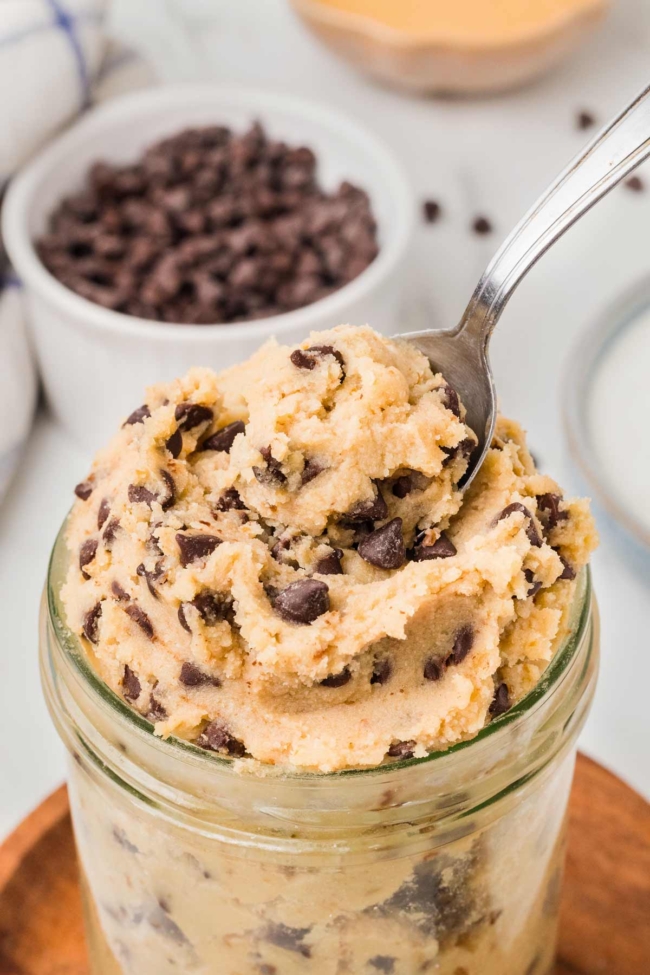
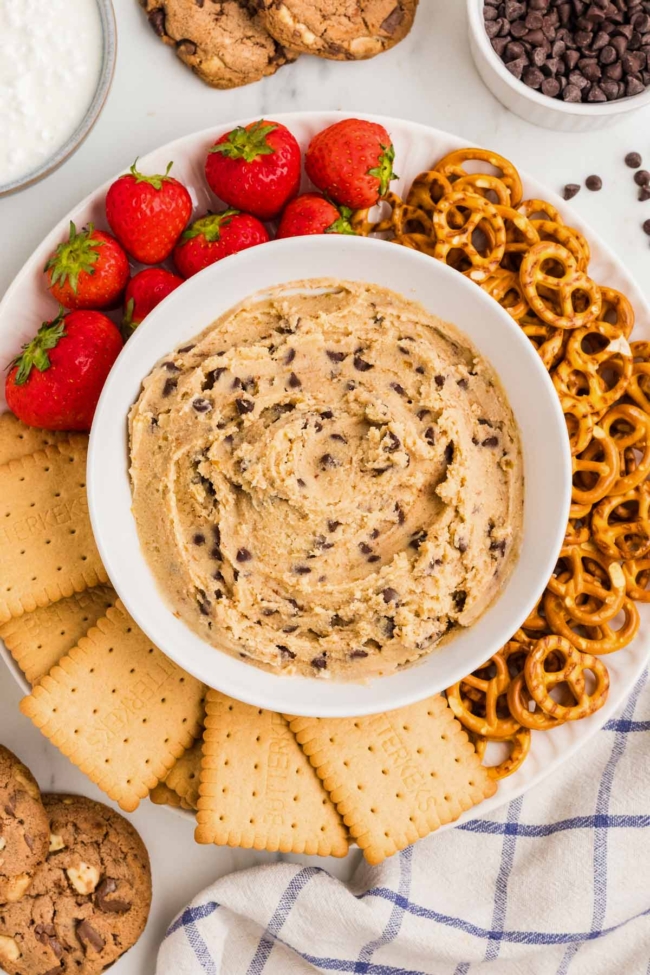
This cottage cheese cookie dough is thick, creamy, rich, and surprisingly close to actual cookie dough despite being made with cottage cheese, almond flour, dates, and protein powder. The cottage cheese blends completely smooth, so you don’t taste it at all. It’s also naturally gluten-free and grain-free.
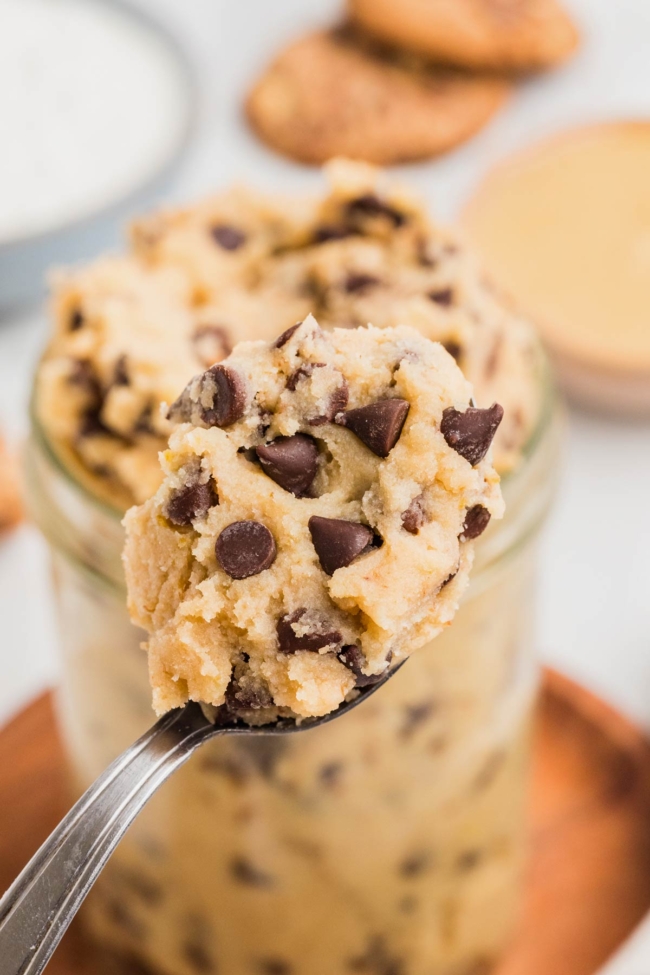
The texture is soft and scoopable right after mixing and gets even thicker after chilling. It almost melts in your mouth, while the chocolate chips add contrast and a little crunch.
This has quickly become one of my favorite late-night snacks. It’s so rich and sweet without being too heavy.
This heatwave has been absolutely miserable (no AC 🥵), and all I want to do is be lazy and eat ice cream.
So I can confirm this cookie dough works great as an add-in for ice cream. I just rolled small balls of cookie dough leftovers, froze them for about an hour, and then used them in this French Vanilla Ice Cream.
If you’re thinking, “Cottage cheese?! Cookie dough?!” I get it. But I promise you don’t need to be scared.
One of the taste testers said, “I’m not used to eating protein powder desserts, so I was a bit skeptical. But this is amazing. Honestly, I couldn’t tell at all that this was supposed to be a high-protein or healthy dessert. If you want cookie dough, this definitely scratches the itch.”
- No baking required – just blend, mix, chill, and eat.
- Actually tastes like cookie dough – not a protein dessert trying to pass as cookie dough. If I’m making a high-protein snack or dessert, I want it to taste like the real thing, just like these Protein Brownies.
- High in protein – thanks to the cottage cheese and protein powder.
Ingredients
Please scroll down for the full recipe. These are just some notes on selected ingredients.
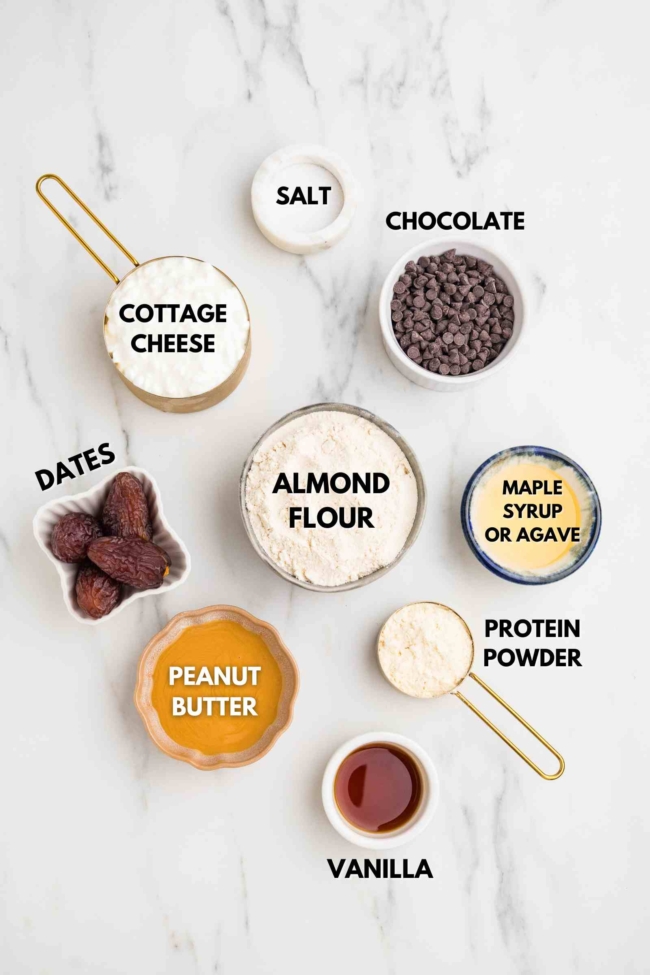
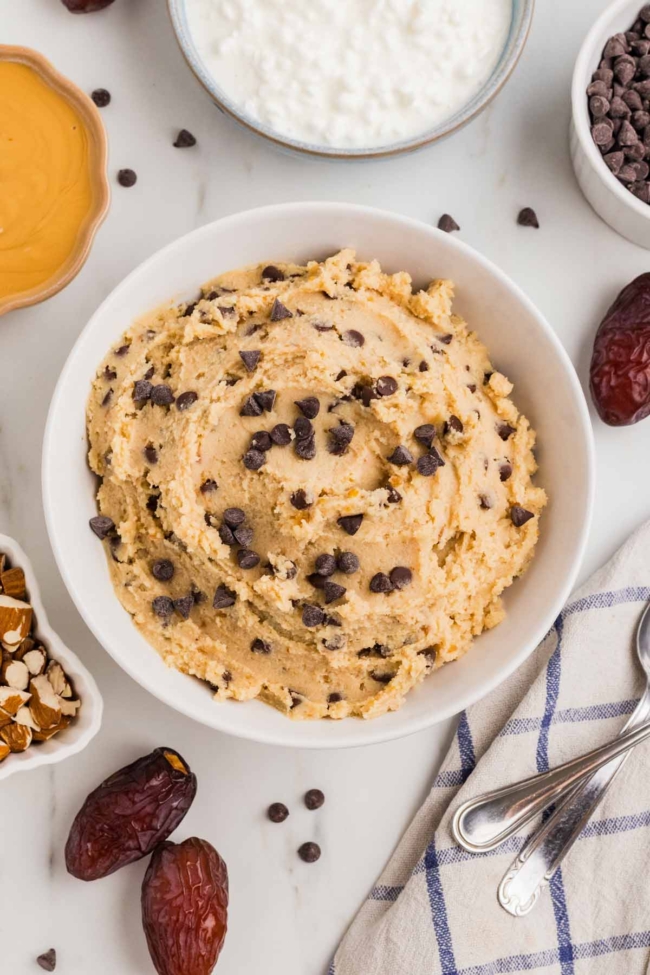
- Dates – Medjool dates were used in the photos, but I’ve also tested this recipe with regular Deglet Noor dates with great results. If you have some leftover Medjool dates, these Chocolate Covered Dates are a great use for them!
- Natural peanut butter – for this recipe, it’s important to use natural, runny peanut butter. That means no added oil or sugar! Standard peanut butter like Jif is too thick and will throw off the dry-to-liquid ratios of the recipe. If you can’t do peanuts, sunflower seed butter or a mix of that and cashew butter tasted closer to peanut butter than the almond butter version I tried.
- Cottage cheese – I used small curd (that’s the regular stuff you find everywhere), full-fat cottage cheese. I wouldn’t swap the full-fat version for low-fat. That will take away from some of the melt-in-your-mouth feel that makes cookie dough so delicious. I’ve tested this recipe with fat-free cottage cheese, but I found the results to be underwhelming. One of the best features of this recipe is how rich and thick the cookie dough feels. The fat-free cottage cheese sacrificed some of the rich, thick texture in favor of lower calories.
- Maple syrup or agave – I don’t recommend honey as it’s too thick. Granulated sweeteners won’t work.
- Finely blanched almond flour – I haven’t tried it, but you could likely use oat flour in its place. You might need a little less. I’d start off with 2 tablespoons and gradually add more.
- Vanilla protein powder – I initially tested this recipe with neutral protein powder to check whether it could be more versatile, but it was too bland.
How to Make It
The only downside to this recipe is that you do need a food processor or a high-speed blender like a Blendtec or a Vitamix. If using one of those, this works great with the smaller jar meant for making nut butter.
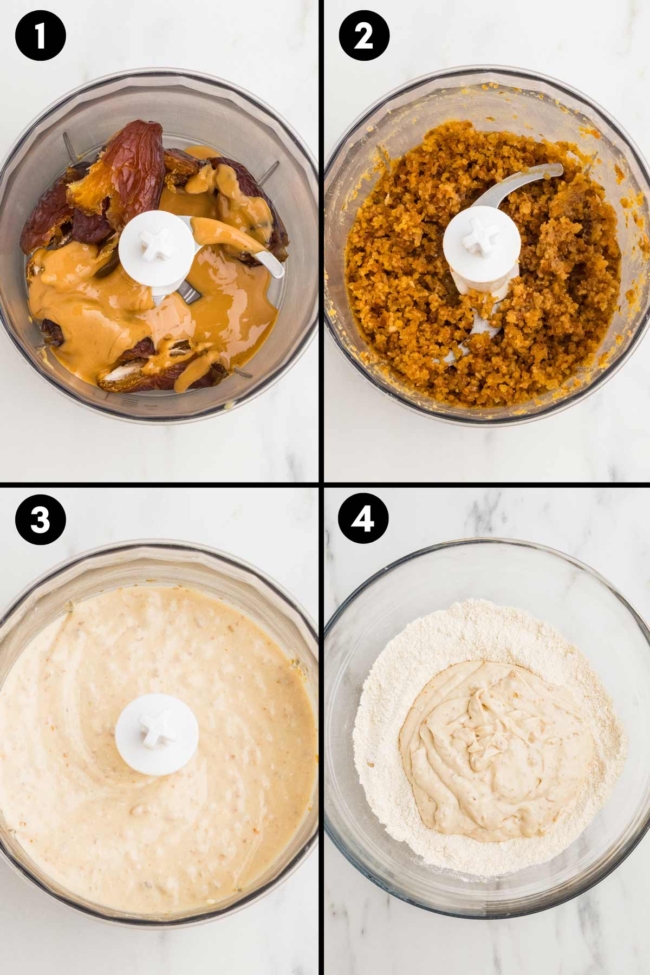
- Blend the dates and peanut butter until the dates are finely processed.
- It’ll look a little weird at this point, but don’t worry.
- Add the vanilla extract, cottage cheese, and maple syrup and blend until completely smooth.
- In a large bowl, whisk together the almond flour, salt, and protein powder. Add the blended mixture and stir until fully combined. At first it may seem too dry or powdery.
- Keep mixing and give the ingredients time to absorb the moisture.
- Fold in the chocolate chips.
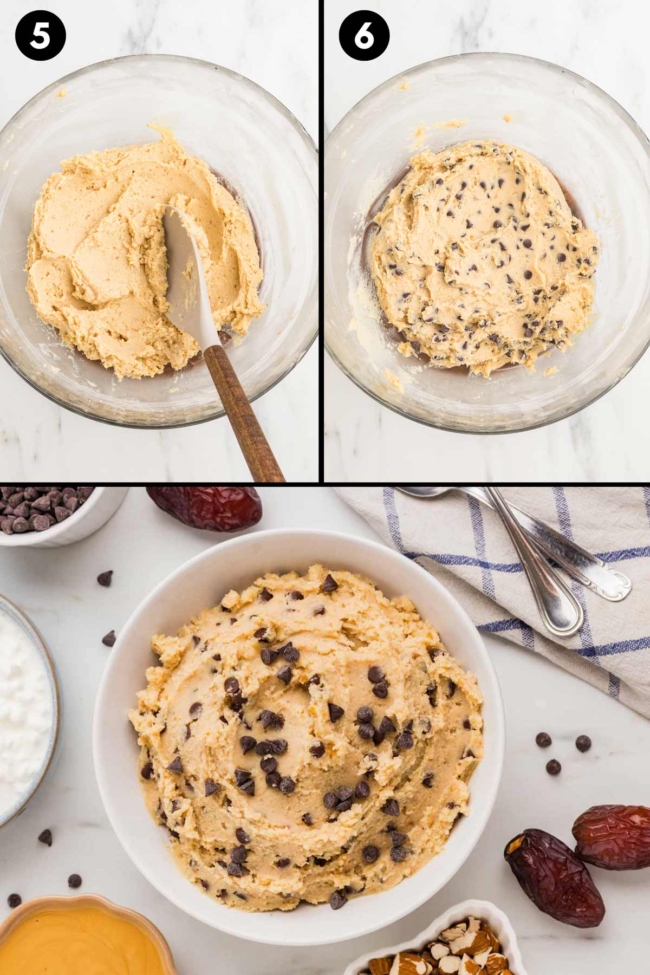
Chill for about 20 minutes. Check the consistency and adjust if needed before serving.
- As you start mixing dry and wet ingredients, it will seem like the dough is too powdery. This is normal. Continue to mix for about a minute, giving time to the flour and protein powder to absorb the liquids and fats from the cheese and sweeteners.
- The brand and type of protein powder you use can impact how well the liquids are absorbed. This is due to the texture additives that each brand uses. The 20-minute chill time allows you to customize the recipe based on the real rate of absorption of your protein powder of choice. Overall, you should aim for soft and scoopable dough. It should not stick too much, and it should be able to hold its shape easily if you roll it into a ball. Personally, I have noticed that my protein powders with a lot of texturizers will require a small milk adjustment, while my simpler protein powders will not.
- The chill time is technically optional, but I really recommend it because the almond flour and protein powder continue absorbing liquid and the texture improves quite a bit. This is also a great recipe to make ahead and keep in the fridge for easy snacking throughout the week.
- Depending on your protein powder – if the cookie dough has been in the fridge for more than 3 hours, you might want to let it rest at room temperature for about 15 minutes before eating it for a softer texture. With some brands, it was still nice and soft straight from the fridge.
Protein Powder Makes a Big Difference
Depending on which protein powder you use, you may need to adjust the amount of liquid in the recipe.
Plant-based protein powders can absorb liquids more quickly than whey protein, depending on the blend and added ingredients, which may result in thicker cookie dough.
I recommend letting the cookie dough chill for 35-40 minutes before adjusting anything. This gives the protein powder time to fully absorb the liquid so you can better judge the final texture.
I’ve tested this recipe with vanilla whey protein powder (which is what was used in the photos) and Doctor Murray Vanilla 3 Seed Protein Powder. Both worked great! I didn’t need any extra chill time or additional liquid with the Doctor Murray powder.
Can I Omit the Protein Powder?
You can! Replace the 1/4 cup protein powder with 2 1/2 tablespoons (16 grams) almond flour. The dough will be less sweet, slightly more grainy, and not quite as thick.
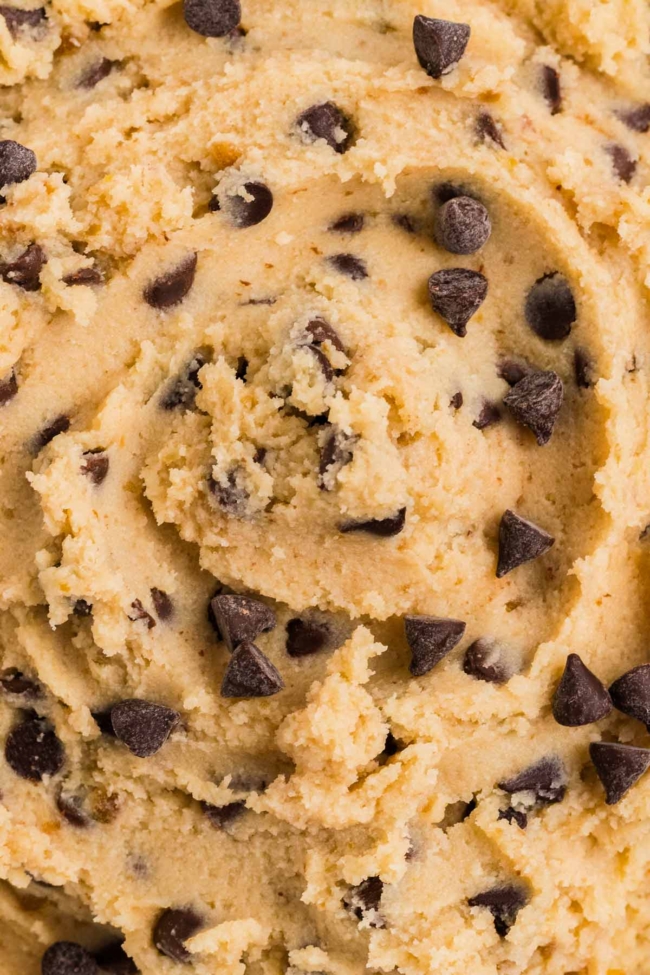
- Too powdery – keep mixing. It often looks dry at first.
- Too thick – let it rest, then mix in milk 1 tablespoon at a time.
- Too soupy – let the dough chill for 30 minutes first. If needed, add almond flour 1 tablespoon at a time until scoopable.
- Can taste cottage cheese – blend longer.
- Not sweet enough – protein powder sweetness varies a lot.
Make Ahead, Store and Freeze
Store in an airtight container in the fridge for up to 4 days. Keep in mind that the longer the cookie dough sits in the fridge, the thicker it will become, especially if you’re using a type of protein powder that has a lot of textural additives (look out for ingredients like xanthan or guar gum). You can add a splash of milk if needed. This will restore the original mix of thickness and softness.
While you could technically freeze the entire batch of cookie dough in a single airtight container, I usually like to shape it into balls and freeze them individually. They thaw very easily in the fridge (I take them out the night before) and make for an amazing snack throughout the week!
Vegan Option
This is definitely possible, but the outcome will heavily depend on the quality and thickness of the vegan cottage cheese and protein powder you use. Look for a thick and creamy plant-based cottage cheese alternative.
If the cottage cheese alternative is thinner, increase the almond flour for structure. If the protein powder absorbs too aggressively, add milk after chilling.
Start with 1 tablespoon of milk for the adjustment and gradually add more until you reach the perfect consistency. The cookie dough should not feel very sticky, and it should hold its shape easily.
Can I use standard, raw all-purpose flour?
No, raw all-purpose flour is not safe to eat. Given that this is a no-bake recipe, you can only use flours that are safe to eat raw. If you do decide to use a different type of flour, keep in mind that their absorption rate will severely impact the texture of the cookie dough. Oat flour, for instance, is safe to eat raw but will absorb much more liquid than almond flour.
Can I bake the cookie dough to make chocolate chip cookies?
No, this recipe is meant for edible, no-bake cottage cheese cookie dough.
❤️ Have you tried this cottage cheese cookie dough? ❤️
Please leave a ✍️ review and ⭐ rating to let me know how it turned out. I appreciate it so much! 💛
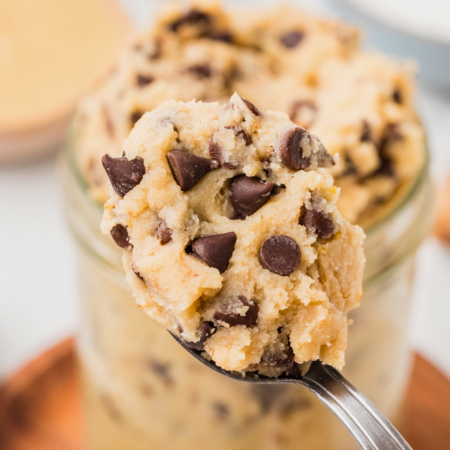
Cottage Cheese Cookie Dough
Ingredients
- 4 (100 grams) pitted Medjool dates or 100 grams Deglet Noor dates
- 2 tablespoons (32 grams) natural peanut butter no added fat or sugar, sunflower seed butter also works
- 1 1/2 teaspoons vanilla extract
- 1 cup (230 grams) full-fat small curd cottage cheese
- 2 1/2 tablespoons (30 grams) maple syrup or agave syrup
- 1 cup (100 grams) finely blanched almond flour
- 1/2 teaspoon sea salt
- 1/4 cup (27 grams) vanilla protein powder see notes
- 1/3 cup (60 grams) semi-sweet or dark chocolate chips
- milk of choice only if needed to thin it down
Instructions
- Start by preparing your wet base. In a food processor, blend the pitted dates and peanut butter until the dates are finely processed.4 (100 grams) pitted Medjool dates2 tablespoons (32 grams) natural peanut butter
- Then, add the vanilla extract, cottage cheese, and maple syrup. Process at high speed until smooth. Set it aside.1 1/2 teaspoons vanilla extract1 cup (230 grams) full-fat small curd cottage cheese2 1/2 tablespoons (30 grams) maple syrup
- Whisk together the almond flour, sea salt, and protein powder until no clumps remain.1 cup (100 grams) finely blanched almond flour1/2 teaspoon sea salt1/4 cup (27 grams) vanilla protein powder
- Add the liquids and mix with a spatula or spoon until the powders are fully hydrated and the dough feels thick. It should have a scoopable consistency at this point.
- Now that the dough base is ready, fold in the chocolate chips until they are evenly distributed.1/3 cup (60 grams) semi-sweet or dark chocolate chips
- For the best result, cover the dough with some plastic wrap and let it rest in the fridge for at least 20 minutes. Then, check how much it has thickened, as this can change based on the brand of protein powder you used. If the dough has become too thick, add a tablespoon of milk and mix with a spatula. Serve the cookie dough chilled.
- Store in an airtight container in the fridge for up to 4 days. Keep in mind that the longer the cookie dough sits, the thicker it’ll become, especially if you’re using a protein powder with a lot of texturizing additives (look for ingredients like xanthan or guar gum). If needed, stir in a splash of milk to bring back that original soft, creamy texture. It can also be frozen for up to 3 months.
Notes
- I've tested this recipe with vanilla whey protein powder (that's what was used in the photos) and Doctor Murray Vanilla 3 Seed Protein Powder. Both worked great! If you're gluten-free or grain-free, make sure to use a compliant protein powder. Doctor Murray is both.
- The nutrition information provided is calculated as a courtesy and is only an estimate. I am not a licensed nutritionist or dietitian. For the most accurate nutritional data, consult a professional or use your preferred calculator.









Comments & Reviews
Brad says
This really tastes like real dough! I was not expecting that! Thank you. My wife came home with waaaay too much cottage cheese and it got boring eating it plain. I’ll be making this often!
Erin @ Easy Wholesome says
You’re welcome! I’m so happy that you liked the cookie dough. 🙂 And awesome that you’ll be making it again! Thanks for your feedback.
Anne says
Loved this! I just got into cottage cheese and I’ve had some dreadful cottage cheese desserts. This is definitely the best by far!
Erin @ Easy Wholesome says
I’m so glad that it was a hit! And yes, there are some bad recipes out there. 😬 Thanks a bunch for your comment!